In 2017 we ran a survey of Stitchmastery users and one response particularly caught our imagination – someone told us they would like to hear from other Stitchmastery users and how they make use of the software. We’re delighted to bring you a series of interviews with designers, tech editors, magazine editors and teachers – we hope you enjoy reading them!
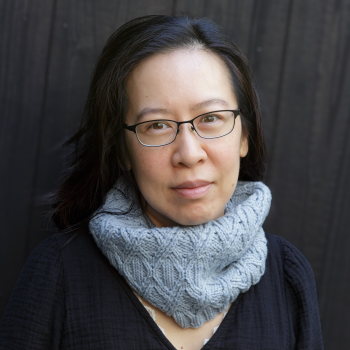
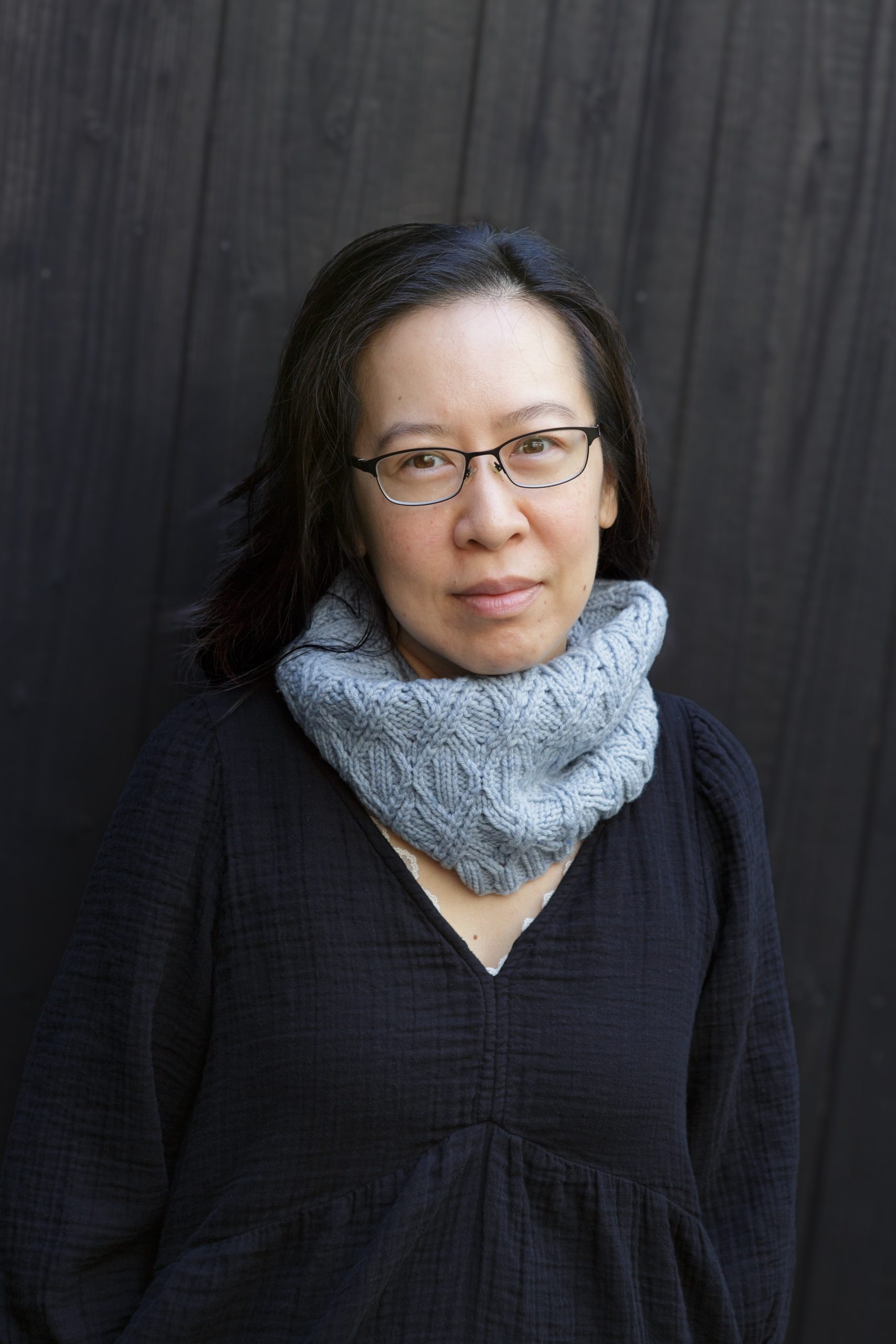
Interviewee – Thien-Kieu Lam
1) When did you start designing? Could you give us a potted history of your knitting and designing background?
My mom is a talented seamstress, and my sister and I both inherited a love of making clothes from her. My sister even studied and worked in costume design for a while. As for me, I took a few classes in fashion and textile design while earning my BFA in college, but it wasn’t until my late twenties that I learned how to knit.
Being an artist, tinkering came naturally, and I published my first knit design with Pom Pom Quarterly in 2015. My designs have since been published with amirisu, Laine Publishing, Making Stories, and others. I enjoy collaborating with these companies, but I also enjoy publishing designs independently, which gives me more flexibility and control of the process.
2) Do you have any recurring sources of inspiration or unusual muses for your design work?
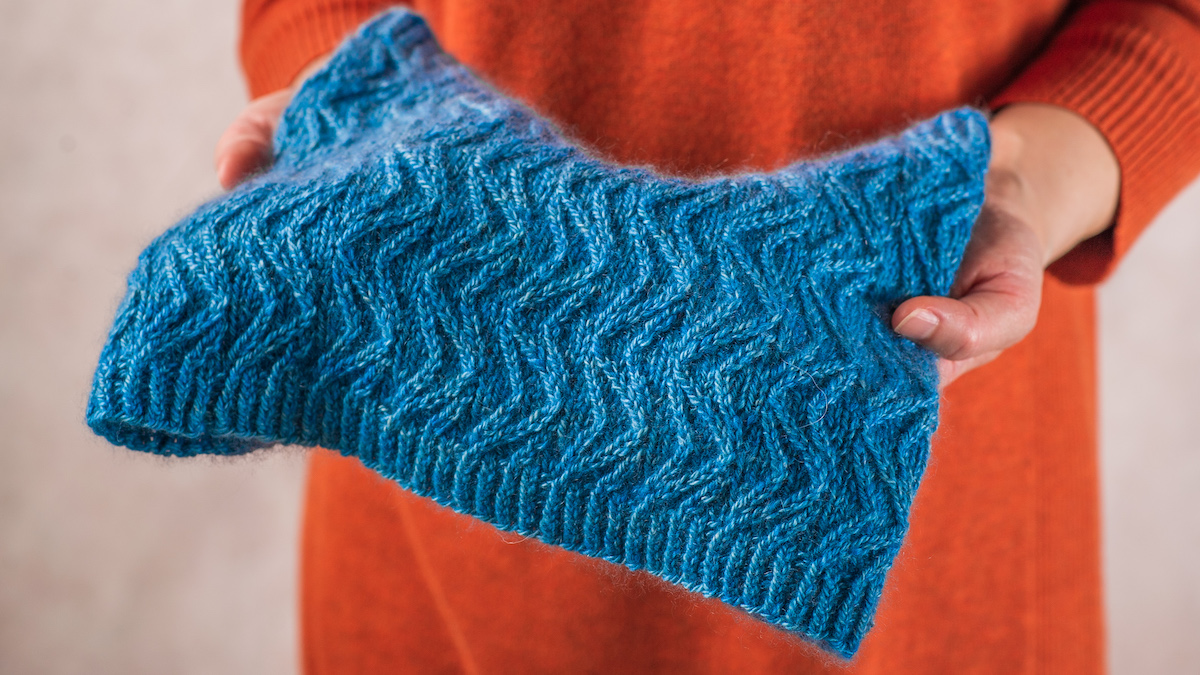
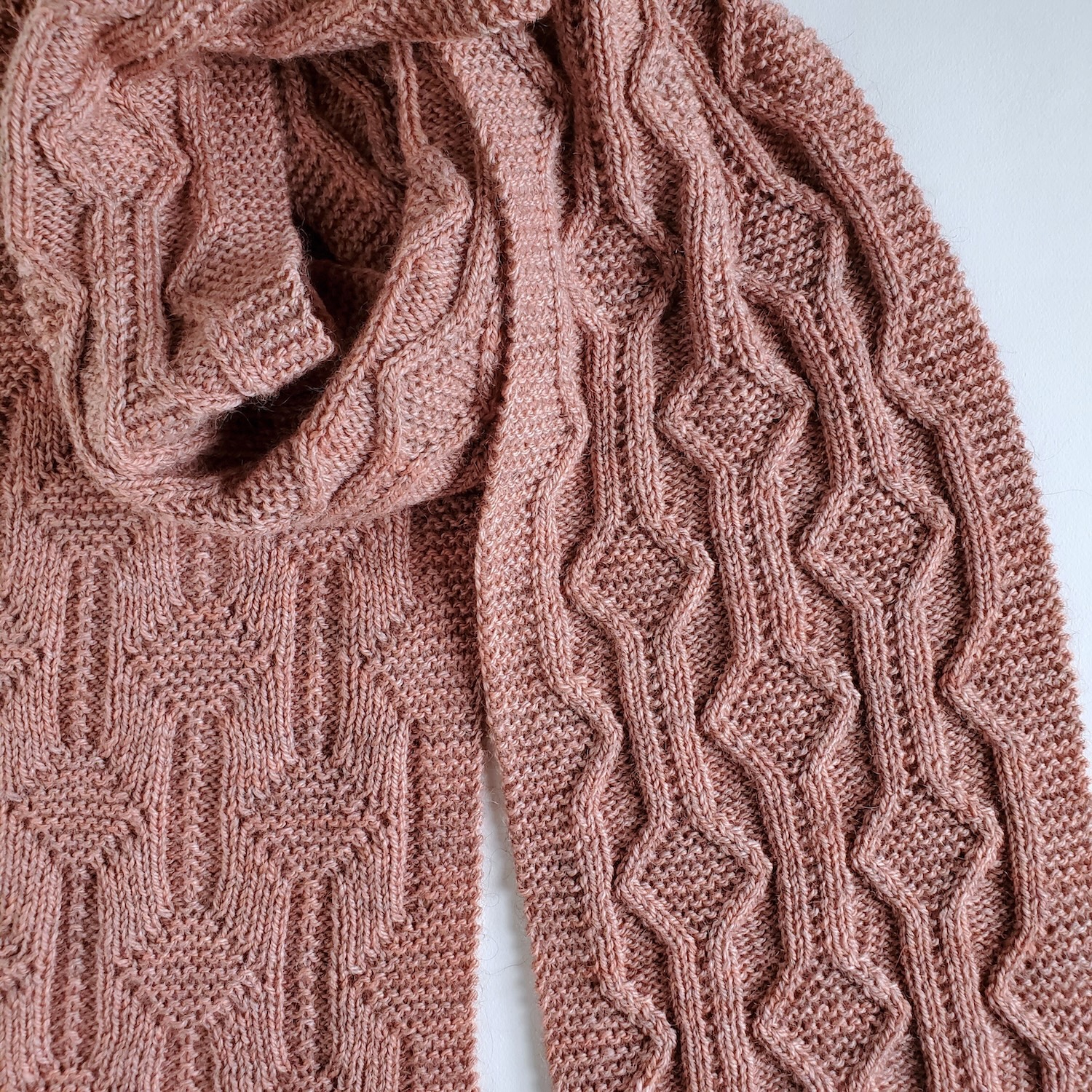
I love texture! The majority of my designs have highly textured fabrics. I often find inspiration in stitch dictionaries, and when I come across a motif that intrigues me, I use it as a starting point for experimentation. Any adventurous knitter can take a motif from a stitch dictionary and apply it to a project, so I like to come up with my own twist to create something more unique. I also love to develop new motifs. The Yumi shawl, Lineage shawl, and Memory Keeper cowl all feature motifs that I developed myself. Additionally, I enjoy the challenge of creating reversible fabrics. All of my shawls and scarves are designed to look great regardless of which side is showing.
I also keep the majority of my swatches as a tactile reference library, and I’ll revisit them from time to time. Sometimes a swatch that didn’t quite capture my imagination at first becomes a source of inspiration years later!
3) When you have an idea, do you always work to a set workflow (eg swatch-knit-chart or chart first then knit) or does your approach change with each design?
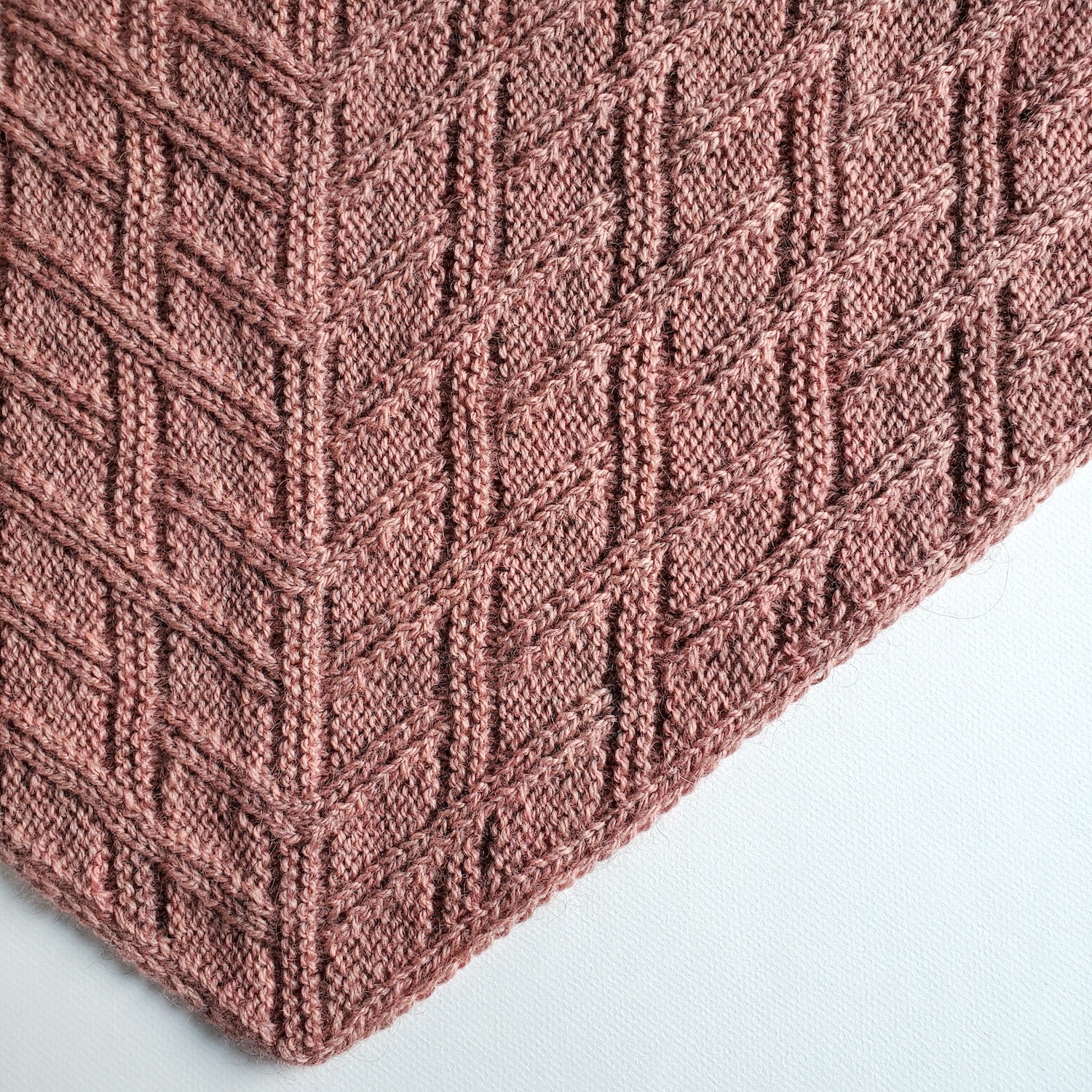
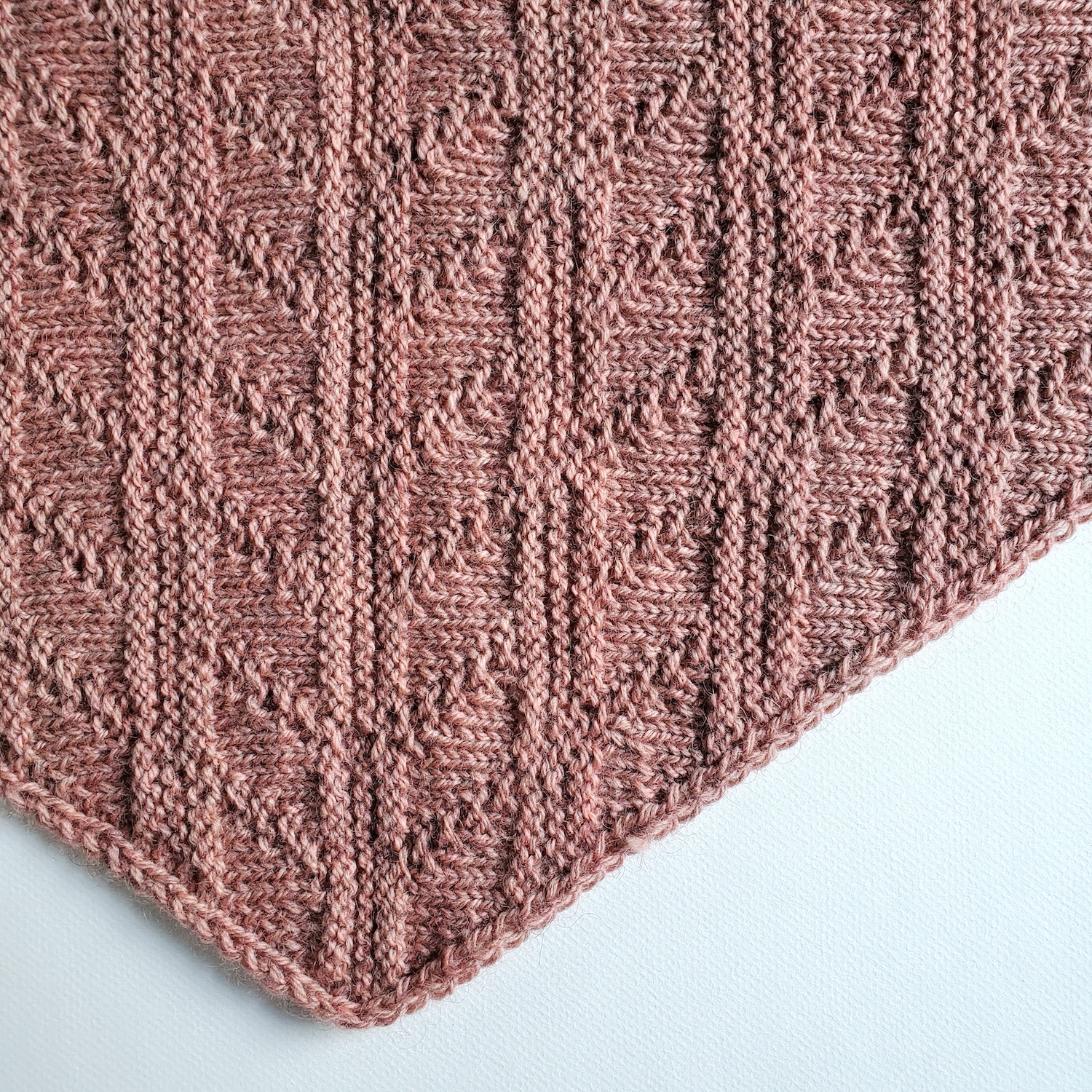
My workflow is generally consistent. My designs usually begin with a stitch motif, and these motifs can come from my sketches or stitch dictionaries. Once I’ve identified the motif I want to explore, I start by charting variations of the motif. Many of these charts are drawn by hand in my knitting graph paper journals from Rowan Morrison (sadly no longer available but I’m lucky to have a stash of them). For larger or more complicated motifs, I’ll create the charts using Stitchmastery because these are much easier to edit digitally.
Next is the swatching phase! I’ll make the first swatch, wash and block it, and then study it. I consider what I like about the swatch and what I might want to change, anything from the gauge or yarn weight to making tweaks to the motif itself. Sometimes I make two or three iterations, sometimes many more. Once I have a swatch and a motif that I like, I then think about how I might apply it to a design. And once I’ve decided on the design, I’ll create digital charts if I haven’t already and write out a complete pattern. I then make my sample using this pattern so I’m essentially test knitter number one.
4) What made you choose to use Stitchmastery? Is there a particular feature you use most regularly or couldn’t do without? And is there anything you wish Stitchmastery could do?
Early in my design career, I would draw charts by hand and send those to the publisher and they would recreate the charts digitally. When I began to publish patterns independently, I wanted a professional way to present my charts. I was drawn to Stitchmastery because it’s designed specifically for creating charts. I think that makes it more intuitive to use versus software like Adobe Illustrator. I also love that I can create a chart and Stitchmastery will generate written instructions for it. I have my own style for formatting written instructions, but it’s a big help to have that text as a starting point.
Stitchmastery is very robust in its features, and I’ve only learned a fraction of them – basically I learn on an as-needed basis. I keep telling myself that one day I’m going to sit down and watch more video tutorials (I’m very grateful for these!) so that I can learn more of the features. Sometimes you don’t know you need a tool until you learn it exists!
5) Please tell us about your latest publication or next exciting project!
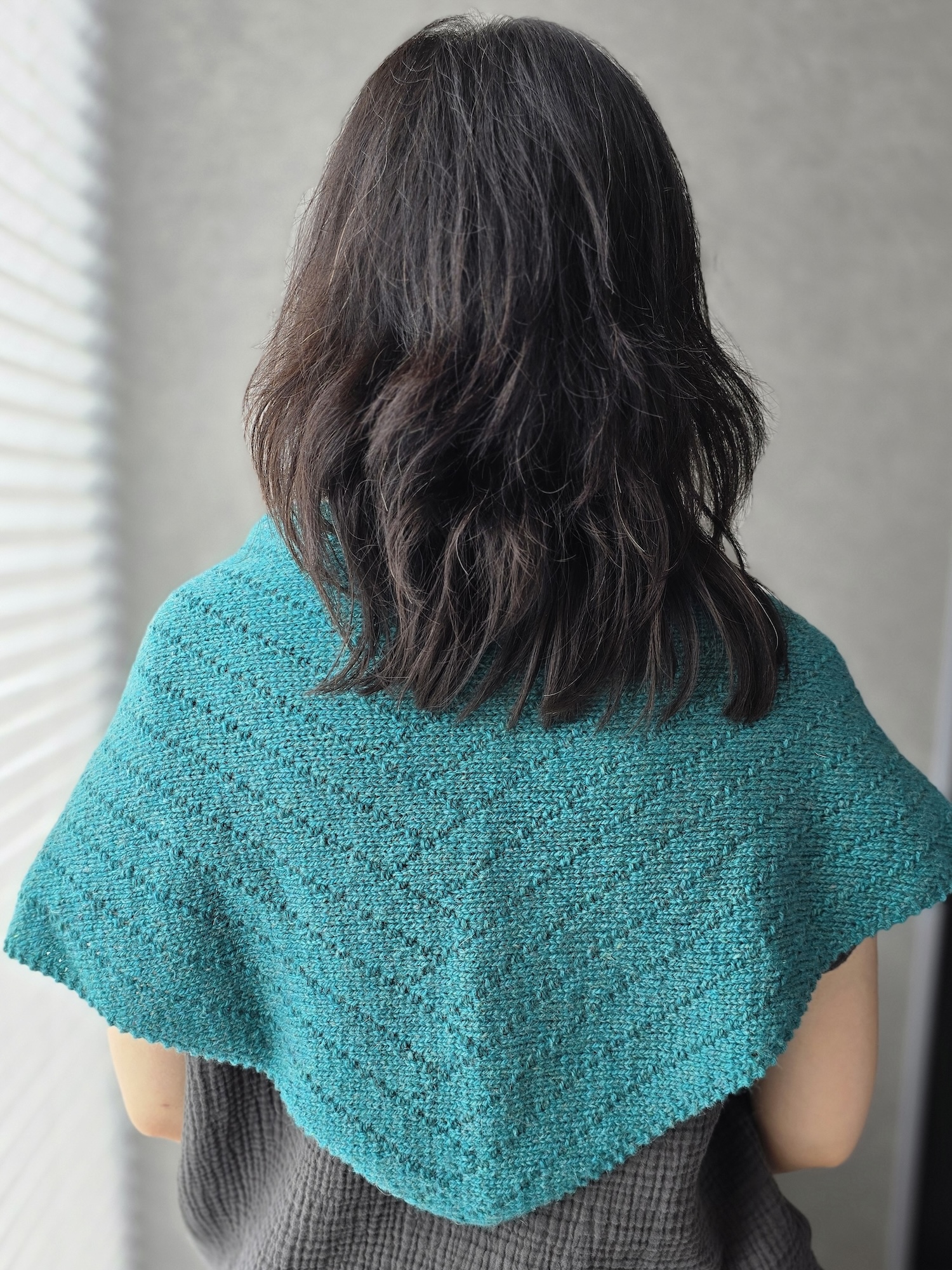
Recently I’ve been very enamored with designing sideways triangular shawls. I published the Duyên shawl at the beginning of this year, and I’m designing another sideways triangular shawl for Indie Untangled’s Where We Knit yarn club. I have another two designs for sideways triangular shawls in the works, and those will likely be released next year.
Learn more about Thien-Kieu:
You can find Thien-Kieu’s designs and artwork on her website, follow Thien-Kieu on Instagram or stay in touch via Thien-Kieu’s newsletter.